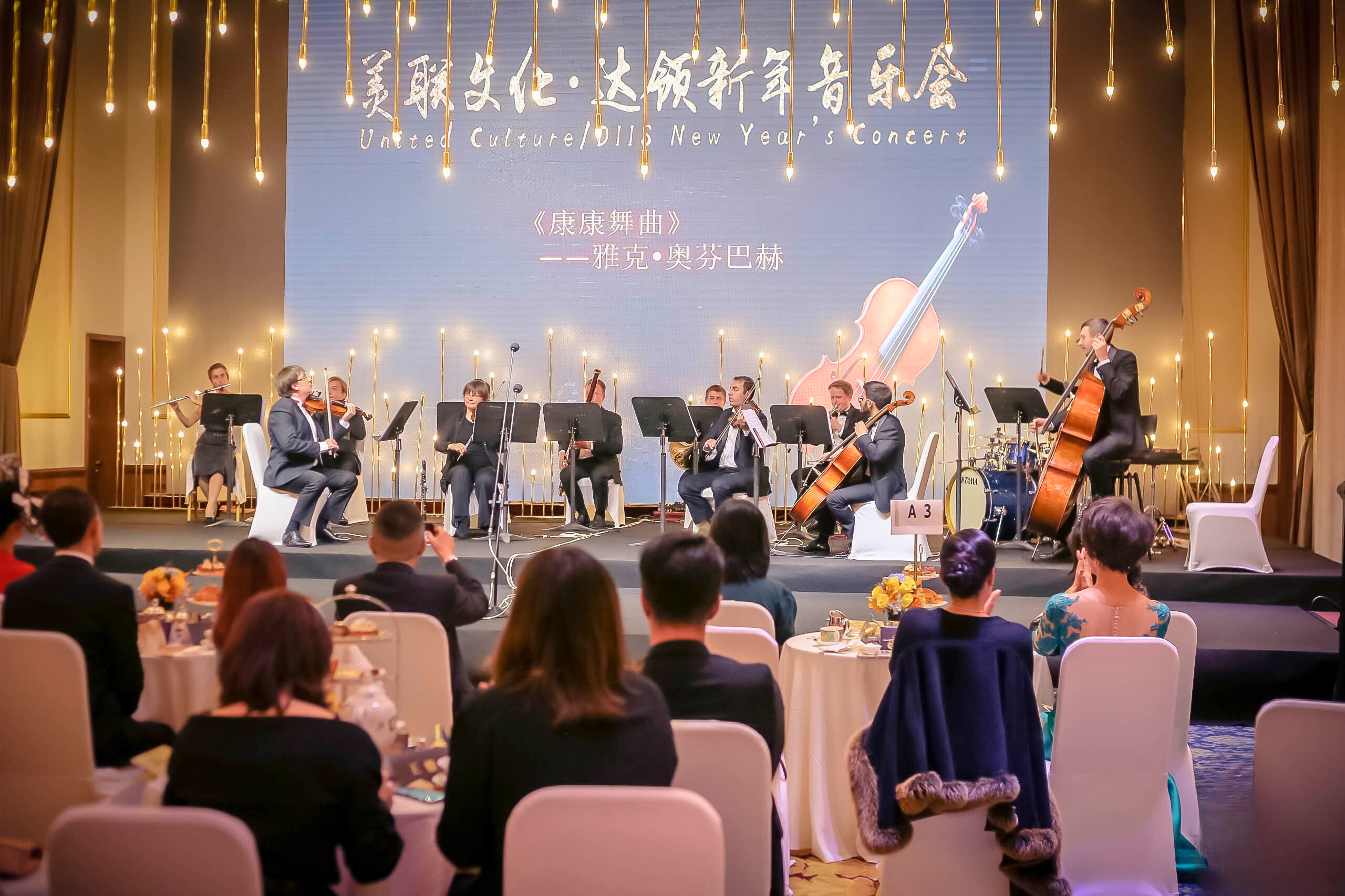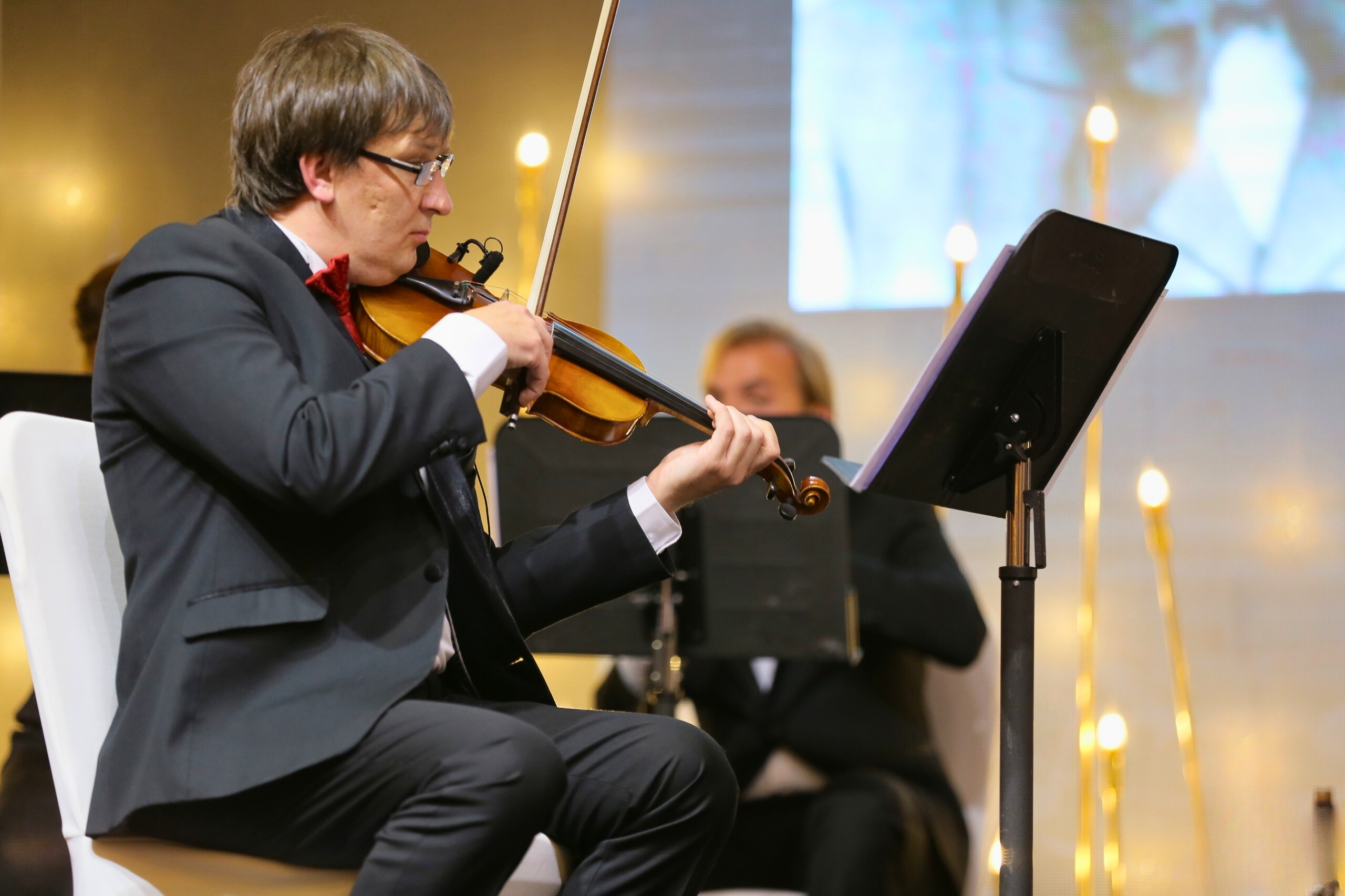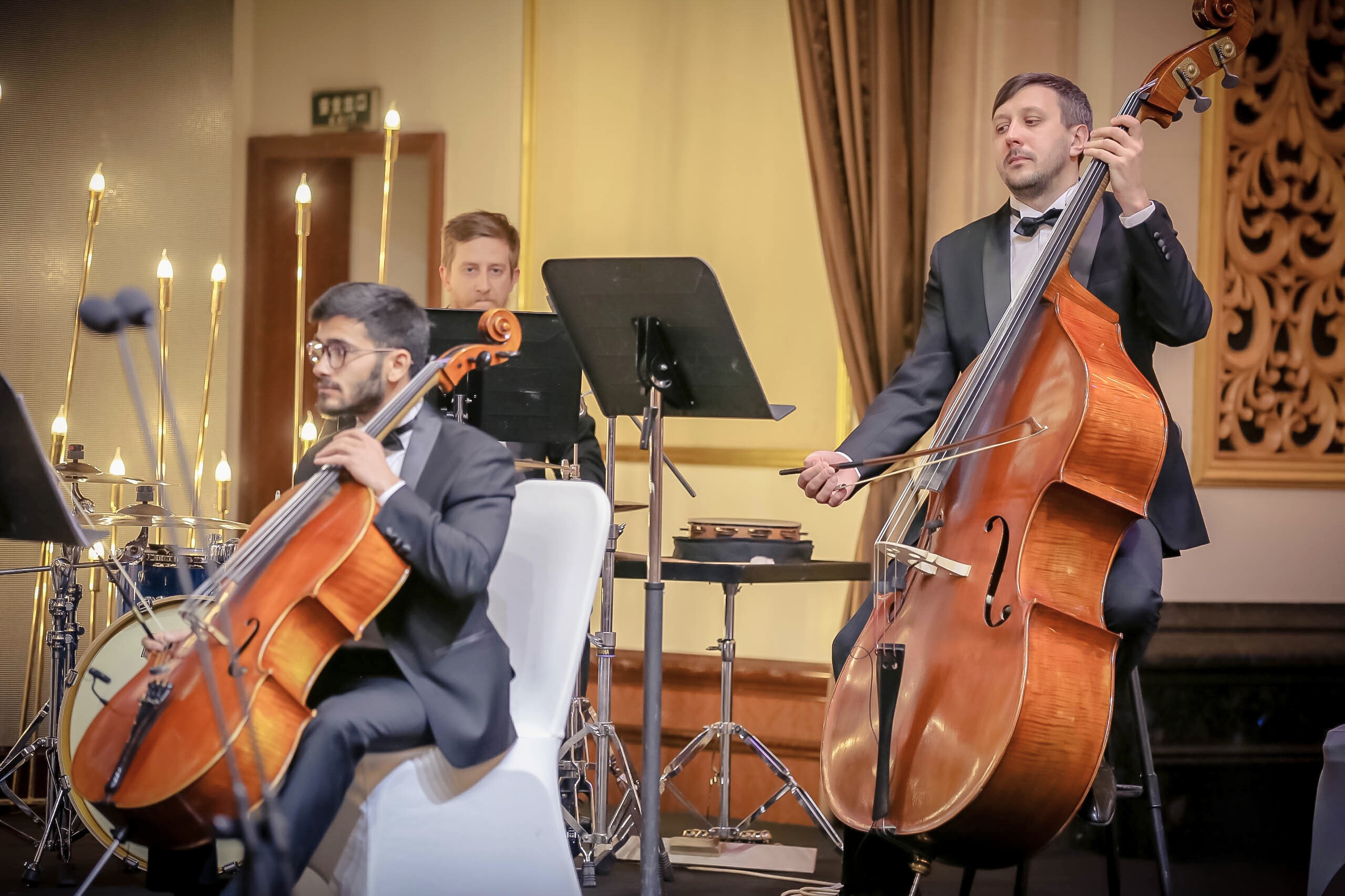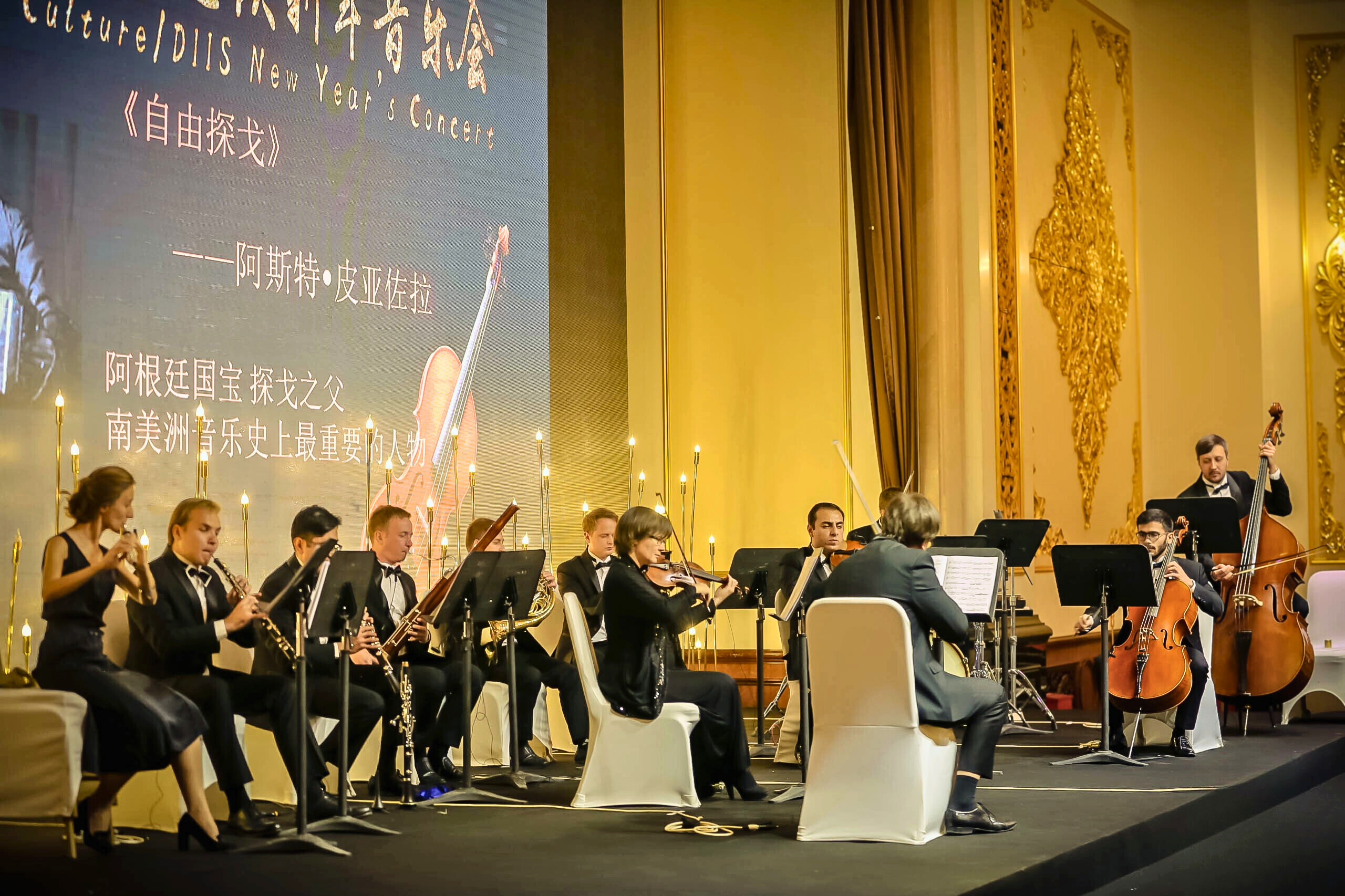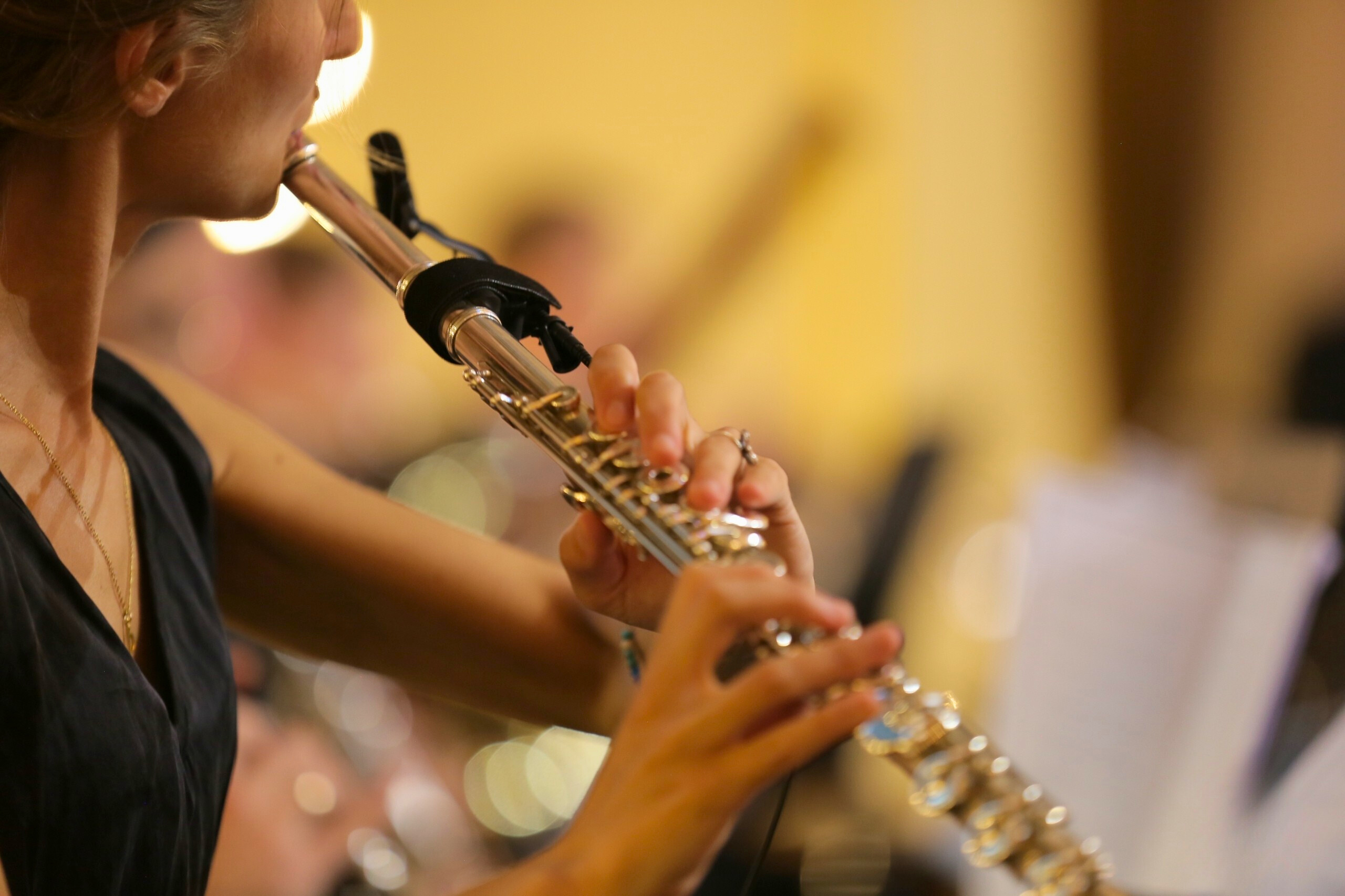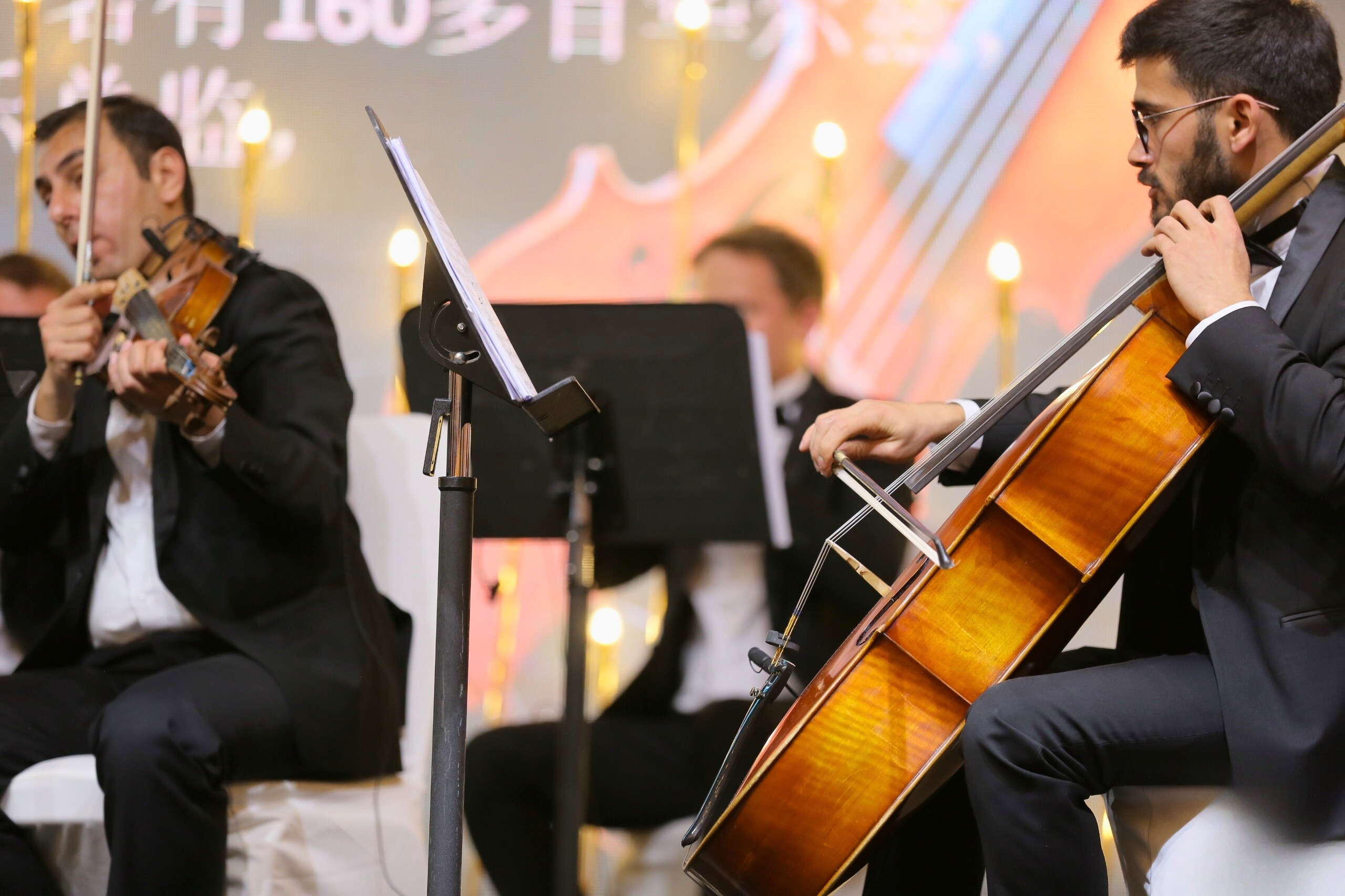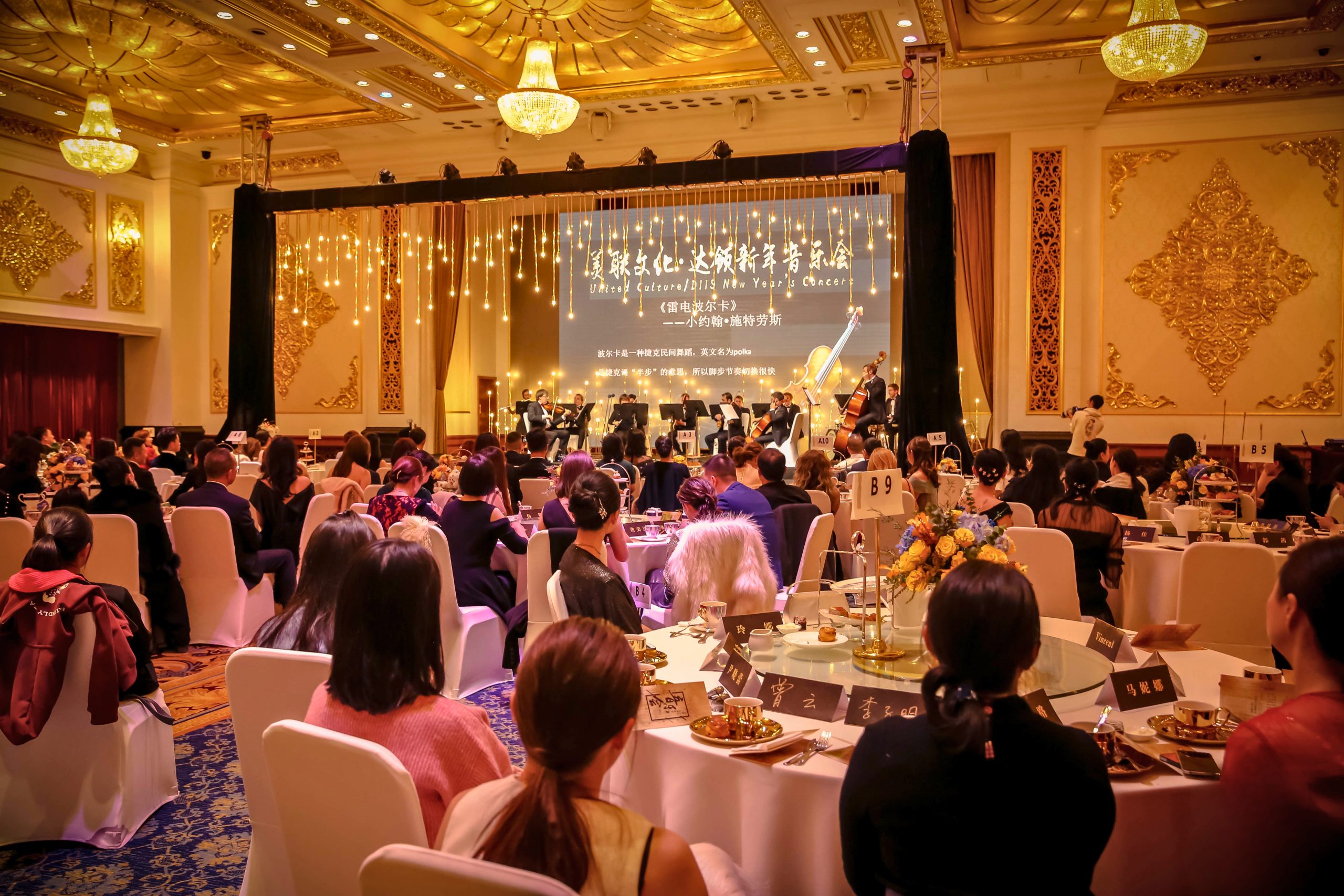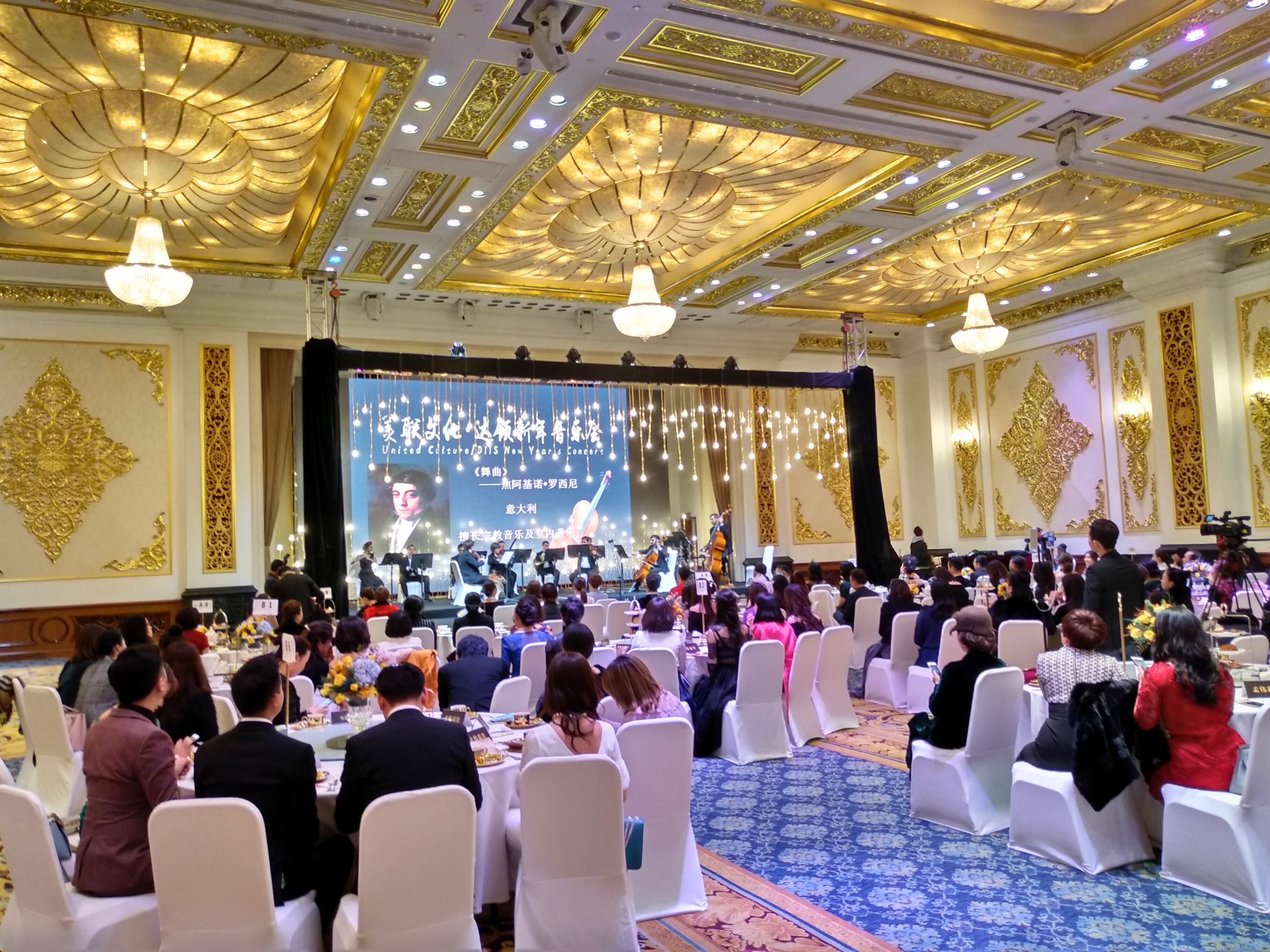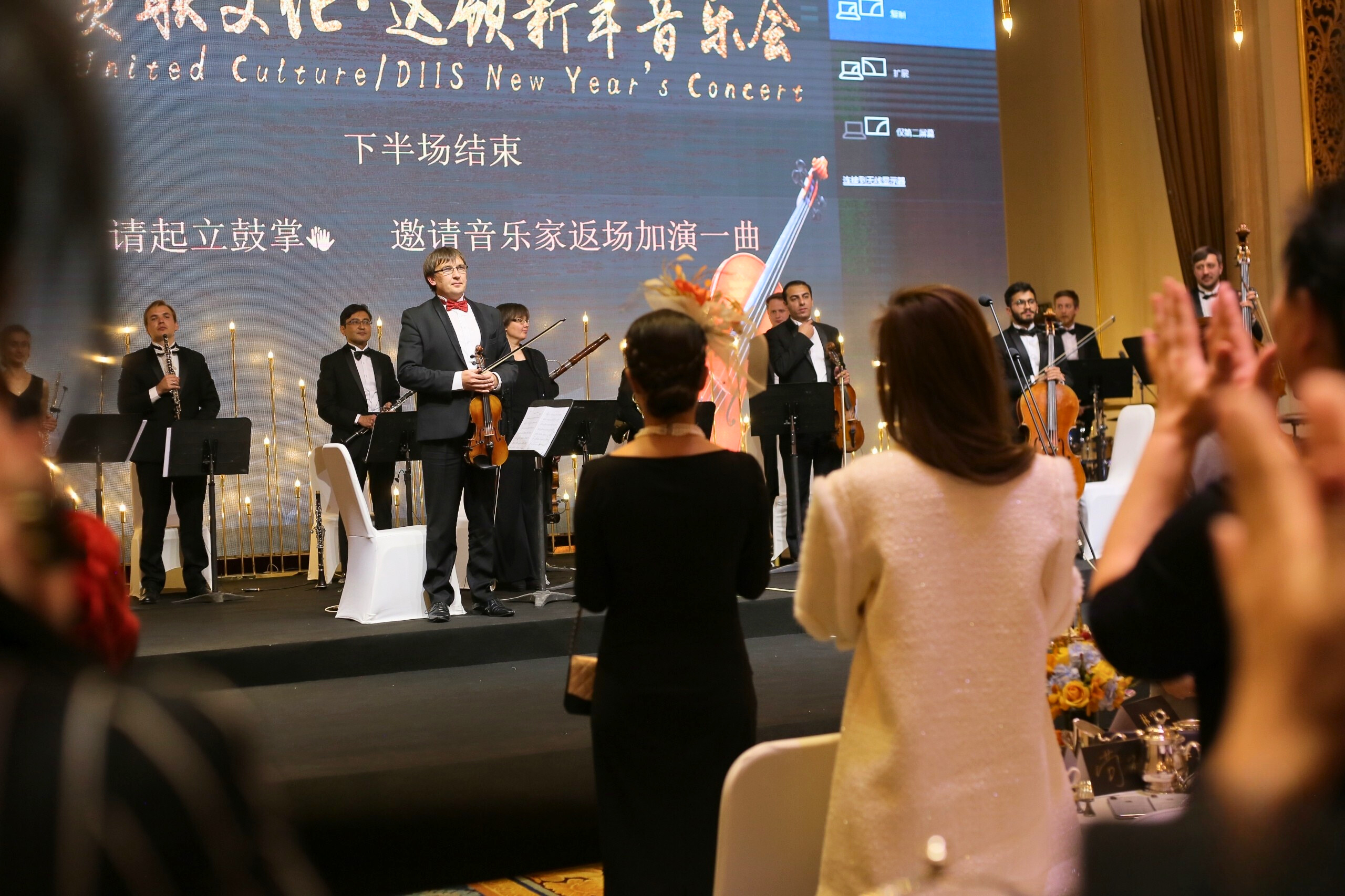
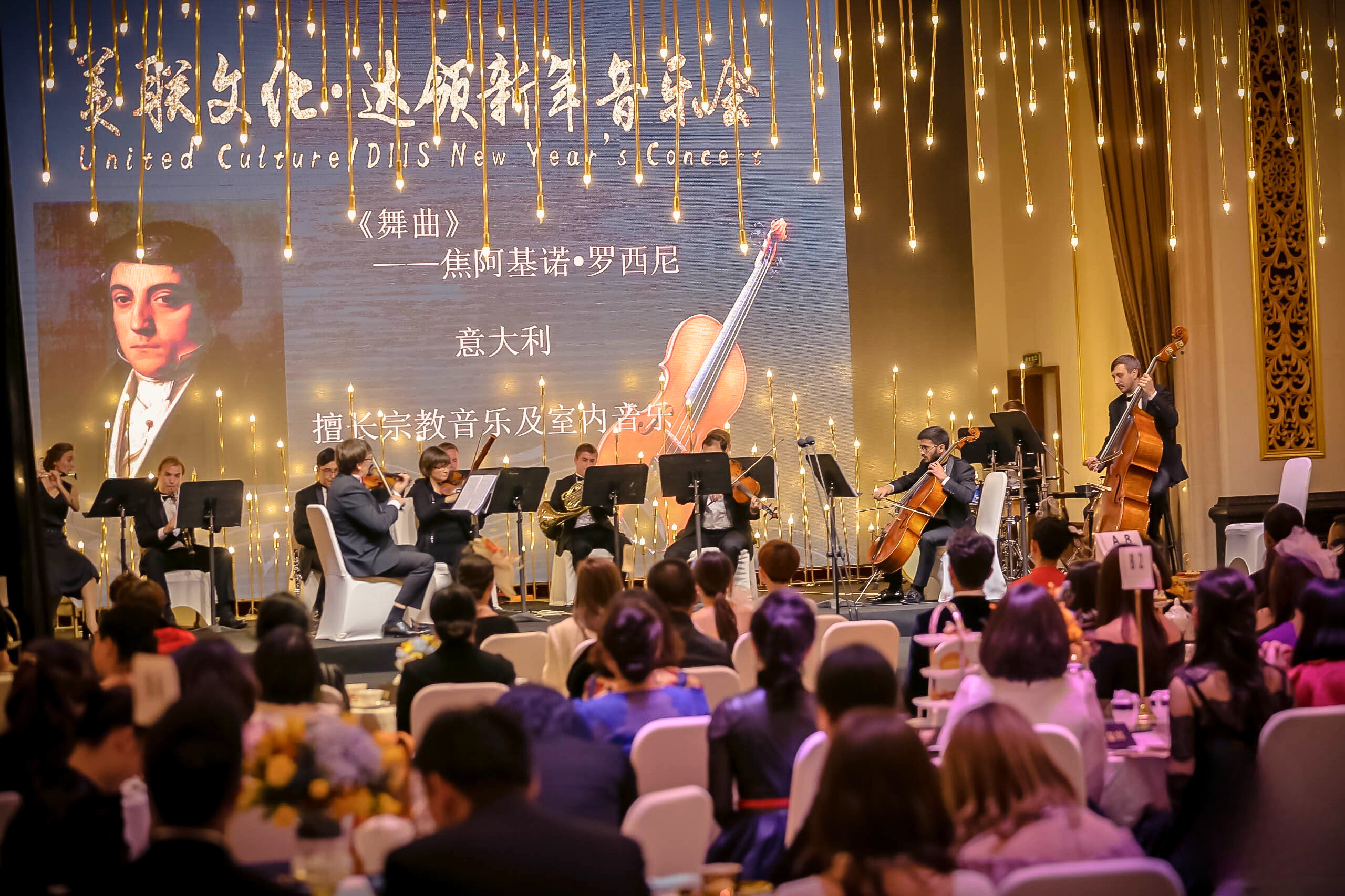
12-piece chamber orchestra performing at corporate New Year concert in Shanghai

Chamber Orchestra at Corporate New Year Celebration

When Music Becomes the Main Event: A New Year Concert That Set the Tone

Most corporate New Year concerts in China happen alongside dinner service. The orchestra plays, guests eat and chat, music becomes pleasant background. Professional, certainly. But does it create a moment people remember?

Our client—a company celebrating with about 100 guests—wanted something different. They’d done the standard gala format before: dinner with background music throughout. This time, they asked us: “Can you create an experience where music isn’t just accompaniment, but the event itself?”

Project Highlights

  • 🎵 12-Piece Chamber Orchestra
  • 🎤 Guided Concert with Historical Context
  • 🎼 Diverse Repertoire from Baroque to Tango
  • 🎹 Custom Arrangement Services
  • 📊 94% Attendee High Satisfaction
  • 🎯 Concert as Main Event, Not Background
The Challenge: Music as Experience, Not Background

The company’s leadership had a clear vision. Yes, photos would show guests at their tables. Yes, this was part of their New Year celebration lunch. But they wanted the music to be a distinct, focused experience—not something happening while people ate and socialized.

We agreed completely. In fact, we pushed back against their initial timeline. “If you want people to truly experience this music,” we told them, “it needs to be its own moment. A separate concert performance before the meal begins. Something that creates atmosphere and sets the emotional tone for everything that follows.”

They trusted us. That trust made all the difference.

Our Solution: The Intimate Power of Chamber Music

We proposed a chamber orchestra corporate event built around a carefully configured 12-piece ensemble. Not just because it fit their budget (though it did), but because chamber music offers something unique: every instrument voice remains clear and distinct while contributing to a rich, complete sound.

Professional chamber ensemble with strings and winds at company celebration

The Challenge: Music as Experience, Not Background

The company’s leadership had a clear vision. Yes, photos would show guests at their tables. Yes, this was part of their New Year celebration lunch. But they wanted the music to be a distinct, focused experience—not something happening while people ate and socialized.

We agreed completely. In fact, we pushed back against their initial timeline. “If you want people to truly experience this music,” we told them, “it needs to be its own moment. A separate concert performance before the meal begins. Something that creates atmosphere and sets the emotional tone for everything that follows.”

They trusted us. That trust made all the difference.

Our Solution: The Intimate Power of Chamber Music

We proposed a chamber orchestra corporate event built around a carefully configured 12-piece ensemble. Not just because it fit their budget (though it did), but because chamber music offers something unique: every instrument voice remains clear and distinct while contributing to a rich, complete sound.

The Ensemble Configuration

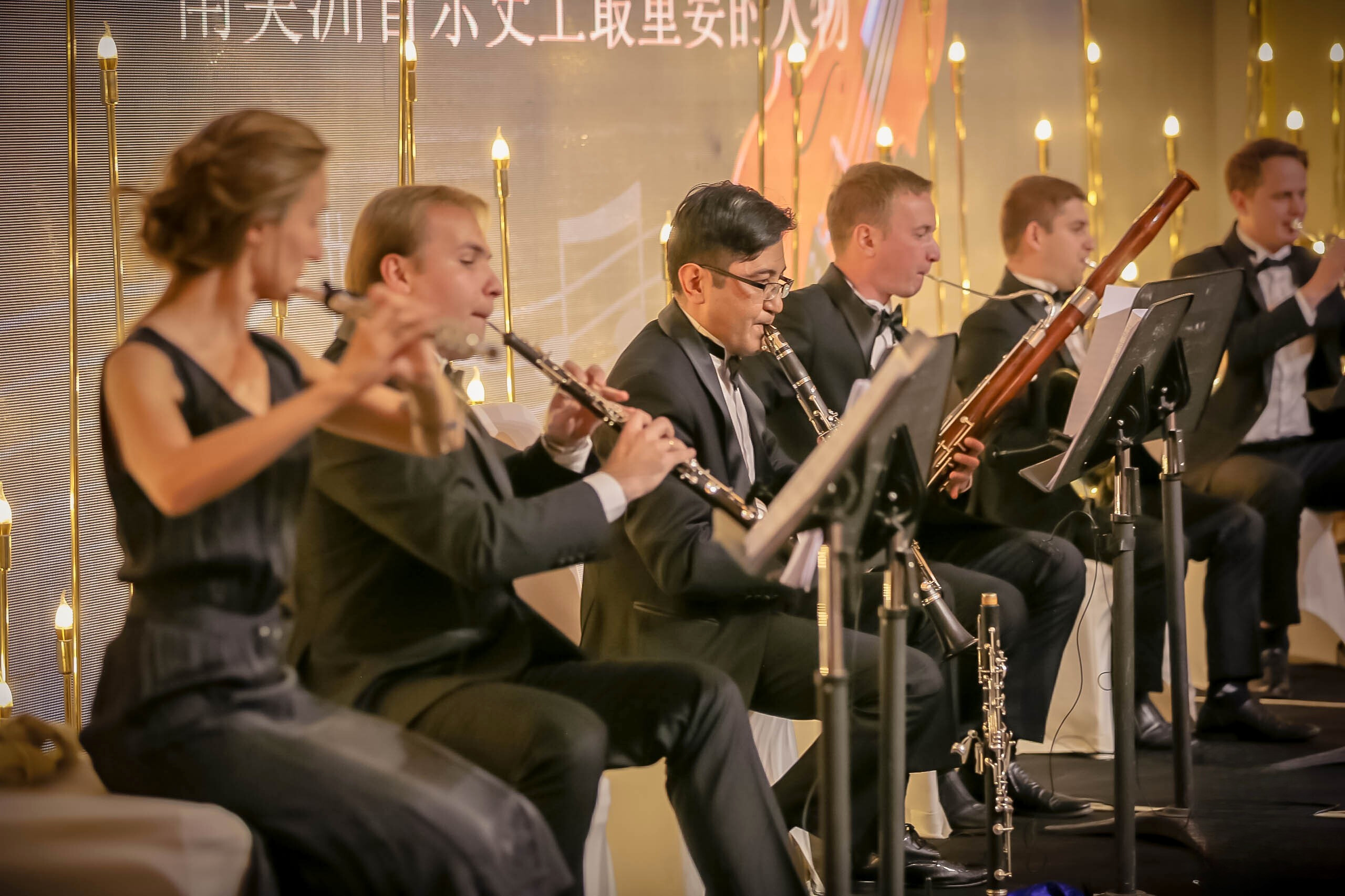
Our 12 musicians included:

  • Flute
  • Oboe
  • Clarinet
  • Bassoon
  • French horn
  • Trumpet
  • Percussion
  • 2 Violins
  • Viola
  • Cello
  • Double bass

This specific combination wasn’t arbitrary. With one player per wind instrument and a string section foundation, we achieved remarkable timbral variety. You could follow individual melodic lines or enjoy the full texture—the choice was yours. The addition of piano for certain pieces expanded our palette significantly, letting us move seamlessly between pure orchestral colors and works requiring keyboard textures.

The Program: A Journey Through Musical Eras

Here’s what many people misunderstand about classical music programming: they think you must choose between “serious repertoire” and “accessible repertoire.” That’s a false choice.

Our New Year orchestra performance took the audience on a journey from Baroque elegance through Romantic grandeur to twentieth-century innovation. We opened with Bach’s Air on the G String—that instantly recognizable melody that somehow sounds both ancient and timeless. Boccherini’s Minuet and Mozart’s Eine kleine Nachtmusik continued the classical elegance.

Then Bizet’s Carmen prelude brought dramatic intensity, followed by a Viennese waltz sequence: Johann Strauss’s Vienna Blood, the playful Trisch Trasch Polka, and of course The Blue Danube—arguably the most famous waltz ever written. You could feel the room’s energy shift as those familiar melodies began.

The second half ventured into Latin American passion with tango classics: Rodríguez’s La cumparsita, Piazzolla’s Libertango, and Gardel’s Por una cabeza. Many guests recognized these from films. Hearing them performed live by chamber orchestra, with all the nuance and emotion that implies, was something else entirely.

We closed with festive favorites: Louis Armstrong’s What A Wonderful World arranged for ensemble, Leroy Anderson’s delightful Sleigh Ride, and holiday classics like Jingle Bells and Carol of the Bells—perfect for the season, perfectly performed.

The key was intentional variety. Different musical eras, different moods, different cultural traditions. Twenty minutes of any single style would lose most audiences. But this progression—classical to romantic to modern, European to Latin American to festive—kept everyone engaged.

The Guided Concert Format: Context That Illuminates

Between pieces, our host—not the conductor, but a dedicated presenter—spoke to the audience. This wasn’t about technical musical analysis. It was about context and connection.

Before the Bach, he described the Baroque era’s aesthetic principles: order, clarity, mathematical beauty. Before the Strauss waltzes, he painted a picture of nineteenth-century Vienna—the imperial capital where these dances weren’t just entertainment but social rituals. Before the tango selections, he explained how this music emerged from Buenos Aires’s immigrant communities, blending European classical training with African rhythms and local sensibility.

This “guided concert” approach transforms how people listen. You’re not just hearing pleasant sounds; you’re understanding historical context, compositional choices, stylistic conventions. It’s fine music art appreciation without the academic stuffiness that can make classical music feel inaccessible.

Several guests mentioned afterward that they’d never understood why certain music sounded “that way” until our host explained the aesthetic principles behind it. That’s exactly what we aim for: giving people tools to appreciate what they’re hearing at a deeper level.

Chamber orchestra stage configuration for corporate event Shanghai

Why This Structure Worked

Creating the corporate New Year concert as a separate, focused event rather than dinner background changed everything. When guests arrived, they found their tables, but the meal hadn’t started. Instead, the ensemble was positioned, ready to perform. Everyone knew: for the next hour, music was the main event.

That changes listener behavior. People settled in, focused their attention, gave the music the respect it deserves. Yes, some photos show guests at tables—but if you look closely, you’ll see they’re watching, listening, engaged. Not eating, not chatting, not checking phones. Just experiencing the performance.

Only after the concert concluded did the meal service begin. By then, the room’s atmosphere had completely transformed. The music had created an emotional foundation for everything that followed. Conversations during dinner referenced pieces they’d just heard. Guests approached musicians during the break, asking questions about instruments and composers.

Why Classical Music Elevates Corporate Events

There’s something about live classical music corporate events that recorded music simply cannot match. It’s not just superior acoustics (though that matters). It’s the human element—watching skilled musicians collaborate in real-time, responding to each other, creating something beautiful together.

That ensemble coordination itself demonstrates valuable principles: individual excellence serving collective goals, careful listening and adaptation, precision combined with artistic sensitivity. These aren’t subtle metaphors. Corporate teams can directly learn from observing high-level musical collaboration.

Beyond the metaphorical value, classical music also signals cultural sophistication. It says: we value craft, tradition, beauty, excellence. We’re willing to invest in experiences that matter. In China’s corporate environment, where cultural refinement increasingly correlates with business success, that positioning matters.

The guided concert format adds another layer. It demonstrates that your organization doesn’t just appreciate culture—you want to share that appreciation with your team, helping them understand and connect with it more deeply. That’s a powerful message about organizational values.

Flexibility: Right-Sizing for Every Occasion

That company New Year gala used a 12-piece chamber ensemble. But we’re not locked into one configuration. Different events demand different approaches.

For intimate gatherings of 50-80 people, we often use smaller formations: string quartet, piano trio, or elegant duos. The music maintains its sophistication, but the scale matches the setting perfectly.

Larger events—300, 500, even 800+ attendees in hotel ballrooms or convention centers—sometimes require bigger sound. For those, we can provide symphony orchestras ranging from 25 musicians (creating impressive sound while remaining manageable) up to 80+ for truly grand occasions.

The ensemble size directly impacts several factors: budget obviously, but also repertoire possibilities, acoustic requirements, stage space needs, and overall atmosphere. We work closely with clients to find the configuration that serves their specific objectives while remaining financially sensible.

Custom Arrangements: Making Any Music Work

Many clients request specific music that wasn’t originally written for chamber or orchestral forces. A founder’s favorite pop song. A piece connected to their brand story. Music meaningful to international partners. Traditional Chinese melodies that hold cultural significance.

That’s where our arrangement services become essential. We can take almost any existing music—contemporary hits, traditional pieces from any culture, jazz standards, film themes—and create versions for live classical instruments that maintain the original’s spirit while working acoustically and musically.

Sometimes clients aren’t sure what they want. They know the mood they’re seeking but not specific pieces. That’s fine. We consult on musical programming, suggesting repertoire that matches their event’s tone, audience demographics, and thematic elements. Years of experience have given us strong intuition about what resonates.

Corporate guests enjoying guided classical concert before New Year dinner

Why This Approach Works

Corporate New Year concerts serve multiple purposes simultaneously. Entertainment, certainly. But also team-building experiences, demonstrations of corporate culture, and opportunities for shared meaningful moments.

The chamber orchestra format particularly excels at creating those moments. The ensemble is large enough to sound impressive yet small enough that audiences feel connected to the performers. The music is sophisticated enough to reflect well on the organization but accessible enough that everyone can enjoy it.

Add the guided concert element—contextual information that helps people understand what they’re hearing—and you transform pleasant entertainment into educational experience. People leave not just entertained but enriched.

Concert presenter providing historical context during guided performance

Looking Forward

Since that event, we’ve produced numerous variations on this theme for different corporate clients. Each one teaches us something new. We’ve learned which repertoire combinations work best for different audiences. We’ve refined our presentation scripts based on what generates strongest response. We’ve developed protocols for adapting to different venues and last-minute schedule changes.

Classical music in corporate settings remains underutilized in China. Many companies default to pop entertainment or DJ performances. Those have their place. But organizations seeking to distinguish themselves, to create experiences their teams will remember, to demonstrate cultural sophistication—those organizations benefit from what live classical performance offers.

If your company is planning a New Year celebration, anniversary event, client appreciation gathering, or any occasion where you want to impress and engage your audience, consider what live orchestra performance might add. We’re happy to discuss possibilities, explore different configurations and price points, and help you create something genuinely memorable.

Tags: Business Celebration / Chamber Orchestra / Classical Music Event / Company New Year Gala / Corporate Classical Concert / Corporate Entertainment / Corporate New Year Concert / Guided Concert / Holiday Concert / Live Orchestra / New Year Orchestra Performance / Orchestra Performance / Shanghai